

Key Points
- Saying “no” is a vital skill for setting boundaries, preventing burnout, and prioritising your well-being—it’s not selfish, it’s self-care.
- Many people struggle to say “no” due to fear of rejection, wanting to please others, or feeling guilty, but learning to do so creates healthier, more balanced relationships.
- Boundaries protect your time, energy, and emotional health, while people-pleasing can lead to resentment, stress, and disconnection from your own needs.
- Practising honest and polite ways of saying “no,” using clear communication, and offering alternatives can make boundary-setting easier and more natural.
- If it feels difficult, support from a therapist or loved one can help you build confidence, reduce guilt, and create a more fulfilling and sustainable life.
Note from William: This article on setting boundaries is one of the most common themes that comes up in therapy. If you find this topic resonates with your own life, you can learn more about me and my therapy services for LGBTQ+ people.
The difficulties in saying 'no' have been documented in scientific literature. But it's an important tool for setting boundaries, breaking the habit of people pleasing, and prioritizing one's own needs.
It's a way of taking control of one's life and creating a healthier, happier future.
However, many struggle with saying 'no' because they want to help to be there for others. There's a worry that saying 'no' will make them seem selfish or unhelpful. It's helpful to recognise that saying 'no' doesn't mean being unkind, it means taking care of yourself.
In this post, I'll explore the importance of saying 'no', and share some strategies for communicating boundaries effectively.
Why Saying No is Difficult
Saying 'no' can be difficult for several reasons. Many of us are conditioned to be polite and accommodating, and saying 'no' can feel like we are being rude or unhelpful.
We may also worry about letting others down or damaging our relationships with them.
Additionally, we may fear missing out on opportunities or experiences if we say 'no'.
However, it's important to remember that saying 'no' is a way of taking care of ourselves and respecting our limits. By setting boundaries and learning to say 'no', we can create a healthier, happier future for ourselves.
The difficulty we have in setting boundaries is often tied to deeper personal and professional experiences. For many LGBTQ+ individuals, it can be linked to a need to "people-please" to feel safe, a theme explored in my guide to self-acceptance and minority stress. For fellow therapists, maintaining strong boundaries is a core ethical skill essential for preventing burnout, which is a central topic in my guide to the BACP framework and sustainable practice.
The Benefits of Setting Boundaries
Boundaries are limits we set for ourselves and others in order to protect our time, energy, and well-being.
They are critical because they help us maintain healthy relationships, prevent burnout, and ensure that our needs are being met.
Without boundaries, we risk becoming overwhelmed, stressed, and resentful.
The negative consequences of not setting boundaries can be far-reaching. We may find ourselves constantly being taken advantage of, taking on more than we can handle, and neglecting our own needs in the process. This can lead to feelings of resentment, burnout, and even physical and emotional exhaustion.
On the other hand, setting boundaries has many benefits. It allows us to communicate our needs and expectations clearly, and helps us take responsibility for our own well-being. By setting boundaries, we can build stronger, healthier relationships with others, and create space for the things that are important to us.
The Dangers of People Pleasing
People pleasing is the act of constantly saying 'yes' to others to gain their approval or avoid conflict. While it may seem like a selfless act, it can actually be harmful to our well-being and relationships.
One of the negative consequences of constantly saying 'yes' is that we may ignore our needs, and that continual ignorance can lead to feelings of stress and fatigue. When we take on too much, we risk becoming overwhelmed and neglecting our needs. Ultimately, this might lead to feelings of resentment and ultimately damage our relationships with others – the opposite of why we say 'yes' in the first place!
Additionally, people pleasing can prevent us from setting boundaries and communicating our own needs effectively. When we constantly prioritize the needs of others, we may neglect our own goals and values. This can lead to a lack of fulfilment and a sense of disconnection from ourselves.
Breaking the habit of people pleasing can be difficult, but it's an important step in taking control of our lives and prioritising our needs. By learning to say 'no' and setting realistic expectations for ourselves and others, we can create healthier, happier relationships and a more fulfilling life.
Prioritising self-care
Prioritising self-care is one of the benefits of saying 'no'.
When we constantly say 'yes' to others, we risk neglecting our own needs and becoming overwhelmed. By learning to say 'no', we create space for self-care and prioritize our own well-being.
This can have numerous positive effects on our lives, such as reducing stress levels, improving our mental and physical health, and increasing our overall happiness.
Additionally, prioritizing self-care can help us become better equipped to handle the challenges that come our way. By putting ourselves first and saying 'no' to things that don't serve us, we can create a healthier, happier future for ourselves.
How to Say 'No'
OK, so if you are reading this far, you are possibility on-board with the idea that saying 'no' more often might be helpful.
But how can you do it?
In this section, I'll explore some strategies for saying 'no' more regularly, tips for communicating boundaries effectively, and examples of how to say 'no' in different situations.
Strategies for Saying 'No' More Often
-
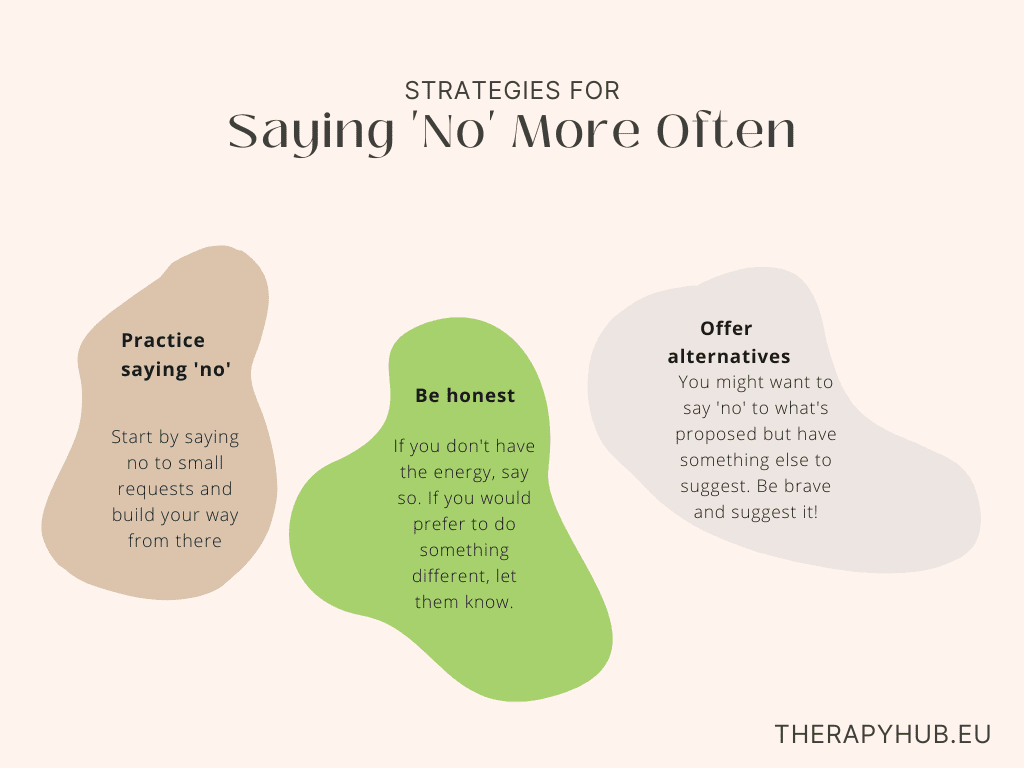
Practice saying 'no': Like any skill, saying 'no' takes practice. Start by saying 'no' to small requests, and work your way up to bigger ones. This will help you build confidence and become more comfortable with the idea of saying 'no'.
-
Be honest: When saying 'no', it's important to be honest about your reasons. If you're not comfortable doing something, or if you simply don't have the time or energy, say so. By being honest, you're communicating your boundaries effectively and preventing misunderstandings.
-
Offer alternatives: If you're unable to do something, consider offering an alternative. For example, if a friend invites you to a party, but you're not in the mood, suggest a different activity that you would enjoy. This way, you're still showing that you care, but you're also communicating your needs.
Tips for Communicating Boundaries Effectively
-
Be clear: When communicating boundaries, it's important to be clear and specific. Explain what you are willing and unwilling to do, and what you expect from others. This will help prevent misunderstandings and ensure that everyone is on the same page.
-
Use 'I' statements: When communicating boundaries, use 'I' statements instead of 'you' statements.
For example, instead of saying "You always ask too much of me", say "I feel overwhelmed when I have too much on my plate". This way, you're communicating your feelings and needs without blaming or criticizing others. -
Listen: Effective communication is a two-way street. When communicating boundaries, it's essential to listen to the other person's perspective and needs. This will help you find a solution that works for everyone.
Examples of How to Say 'No' in Different Situations
-
When asked to do something you don't have time for:
- "I appreciate the opportunity, but I'm currently swamped with other projects. Can we revisit this at a later time?"
-
When asked to attend a social event:
- "Thanks for the invitation, but I'm not feeling up to it tonight. Let's plan something for another time."
-
When asked for a favour:
- " I'm unable to do that for you right now. Is there anything else I can help with?"
Different ways you can say no
Though I will often tell clients that the shortest sentence in the English language is "No.", we do have a wide range of ways that we can say no to someone. Here's a starting list of ways that people can say no.
Can you think of others?
1. Brief and Straightforward
For when you need to be concise without explanation.
-
No.
-
Nope.
-
Not this time.
-
I can’t.
-
I’m not able to.
-
That’s not going to work.
2. Direct but Polite
Suits most everyday or professional situations.
-
I’ll have to say no.
-
I’ll pass, but thank you.
-
I appreciate the offer, but I’ll decline.
-
Thanks for asking - I’ll sit this one out.
-
I’m going to pass on that.
-
I’ll leave it, if that’s alright.
3. Softened or Indirect
Useful when you want to say no gently or leave less room for confrontation.
-
I’m not so sure that’s right for me.
-
I’d rather not, to be honest.
-
Let’s leave that for now.
-
I don’t think I can commit to that.
-
I’ll think about it, but I’m leaning towards no.
-
It’s probably a no from me.
4. Framed Around Priorities or Limits
Helps express boundaries while remaining professional or self-aware.
-
I don’t have the bandwidth for that at the moment.
-
I’m focusing on other things right now.
-
That’s outside what I can take on.
-
I’ve got to be careful with my time, so I’ll pass.
-
I’ve promised myself I wouldn’t take on anything extra.
-
I’m stretched too thin to do it justice.
5. With Alternatives or Suggestions
Keeps the conversation moving or helpful even while declining.
-
I can’t, but maybe [Name] could help?
-
That’s not something I can do, but have you thought about [Option]?
-
I’m not available, but feel free to keep me in mind another time.
-
I’m not the best person for that, but I can point you in the right direction.
-
I can’t join, but I hope it goes well.
6. Light or Humorous
Appropriate with people you know well, to soften the tone or lighten the moment.
-
That’s a no from me.
-
I think I’ll quietly decline and slip out the back.
-
Only if time starts moving backwards.
-
I’d love to say yes, but I’d be lying.
-
I’m going to have to pretend I didn’t hear that.
7. Clear Boundaries (Personal or Social)
For setting limits without guilt or long explanations.
-
I’m not comfortable with that.
-
I’d rather keep things as they are.
-
That’s not something I’m willing to do.
-
I’m saying no to protect my time.
-
I’ve decided not to get involved.
-
That’s not for me.
What to do if it all feels too difficult
Learning to say 'no' and setting boundaries can be a challenging process, especially if you're used to constantly putting others' needs before your own.
If you find yourself struggling with this, it's important to remember that you don't have to do it alone. Talking to a counsellor or therapist can be a helpful way to explore your feelings and work through any obstacles you may be facing.
A trained professional can offer support and guidance as you navigate the process of setting boundaries and prioritizing your needs. Additionally, reaching out to trusted friends or family members can provide a valuable source of support and encouragement.
Remember, taking care of yourself is important, and every so often that means asking for help when you require it.
Conclusion
In conclusion, saying 'no' is an essential tool for setting boundaries, breaking the habit of people pleasing, and prioritizing our own needs.
While it may feel uncomfortable at first, it's helpful to remember that saying 'no' doesn't mean being unkind or selfish. By setting boundaries, we can create healthier, happier relationships and ensure that our needs are being met.
Setting boundaries has several benefits, including preventing burnout and maintaining healthy relationships. By communicating our needs and expectations clearly, we can build stronger, more fulfilling relationships with others. Additionally, prioritizing self-care is an important aspect of saying 'no'. By making time for ourselves and taking care of our needs, we can reduce stress levels, improve our mental and physical health, and increase our overall happiness.
If you find yourself struggling to say 'no' or set boundaries, remember that you don't have to do it alone. Seeking the support of a therapist or trusted loved one can be a valuable tool in the process of learning to prioritize your own needs. By taking small steps and practising regularly, you can build the confidence and skill needed to say 'no' effectively and create a healthier, happier future for yourself and those around you.
Feel like talking about this with a professional? Book an initial free consultation with me today.