
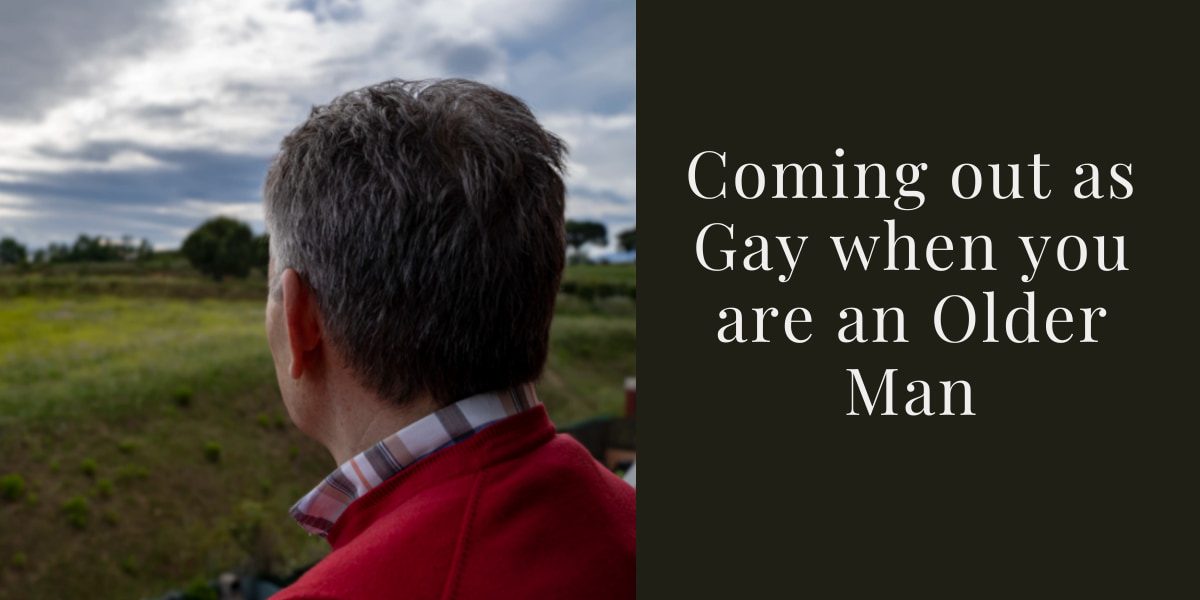
It often starts as a quiet whisper. Perhaps it’s a feeling you get watching a certain film, a pang of recognition in a book, or a quiet moment of reflection when the house is empty. For years, maybe decades, you’ve pushed it down. You’ve built a life, followed a path, and done what was expected. But now, in your 40s, 50s, 60s, or older, that whisper is getting harder to ignore.
A question surfaces: “I think I might be gay.” And it’s immediately followed by another: “But I’m 50. Is it too late? Have I missed my chance?”
If this is you, you are not broken, you are not behind, and you are certainly not alone.
In my practice as a therapist who is an accredited member of the BACP, I work with men just like you. My work is GSRD-informed, which simply means it affirms all Gender, Sexuality, and Relationship Diversity. And I can tell you with confidence: this is not an ending. This is the start of living a more authentic life, and you are arriving with a wisdom that a 20-year-old could only dream of.
The Whisper Becomes a Roar: Why Now?
It makes perfect sense that this realisation is happening for you now. For men 40+ in the UK, the world you grew up in was profoundly different.
Many of you came of age under the shadow of Section 28, a piece of legislation that banned the "promotion" of homosexuality in schools. You witnessed the devastating AIDS crisis, often framed by a hostile press as a "gay plague."
The social and cultural messages you received were clear: being gay was, at best, a punchline ("I'm free!") and, at worst, something dangerous, shameful, or tragic ("AIDS: don't die of ignorance").
So you did what you had to do to survive and to find acceptance. You may have married a woman you genuinely love, had children, and built a successful career. These things are not a lie; they are part of your story.
But now, life’s circumstances have shifted. Perhaps your children have left home, a long-term relationship has ended, or you’re simply finding more time for introspection. The external pressures have lessened, creating space for your internal truth to finally be heard. This isn’t a mid-life crisis; it’s a mid-life clarification.
Confronting the 'Time Lost' Fallacy
The most common and painful feeling I hear from men in your position is an immense grief for "time lost." You might look at younger generations living openly and feel a deep sense of injustice and regret. "I could have had this. I could have been happy sooner."
This feeling is valid and deserves to be mourned. But I want to gently challenge the idea that your time was lost.
Think of it this way: the life you have lived has forged the man you are today. The resilience you built, the empathy you learned, the responsibilities you shouldered - these are not liabilities. They are your assets.
You haven't spent 50 years on the wrong path; you've spent 50 years building the foundation for this new, more authentic chapter. You understand commitment, you know how to navigate complex relationships, and you have a much clearer sense of who you are and what you value.
You are not starting from scratch. You are starting from experience.
Your Second Adolescence: With the Wisdom of a Grown Man
There's a concept often called the "second adolescence" that many later-in-life gay men experience. It’s a period of firsts: first same-sex date, first time in a gay bar, first time holding a man's hand in public. It can feel exciting and also incredibly daunting.
The key difference? Unlike your first adolescence, you bring decades of life experience to this exploration. You know your own mind. You are more emotionally regulated. You likely have more financial and social stability.
It’s an opportunity to explore desire, connection, and identity with the self-awareness you've spent a lifetime cultivating. You get to have the excitement of discovery without the insecurity of being 17. It’s a powerful and unique position to be in.
Navigating Your New Path: 5 Practical Steps to Coming Out Later in Life
Feeling this is one thing; acting on it is another. It can feel overwhelming. So, where do you begin? Here are five practical, grounded steps to help you navigate this journey.
1. Find a Confidential Anchor
Before you tell anyone else, you need a safe space to process this for yourself. This is about finding your footing before you take a step.
-
A professional space: The most secure anchor is a qualified therapist, particularly one experienced in GSRD. This is a non-judgemental, confidential space built entirely for you.
-
A private option: Start a journal. Write everything down without censorship - your fears, your hopes, your confusion. The act of putting words to paper can bring immense clarity.
-
A trusted friend: If there is one person in your life you trust implicitly, you might consider confiding in them. Choose someone known for their compassion, not their gossip.
2. Redefine 'Community' for You
The idea of the "gay scene" can be intimidating. The good news is, community is what you make it, and it can be tailored to your life and comfort level.
-
If you live in a smaller town or village, community might look different. You could explore online forums for older gay men that focus on friendship. It could be an LGBTQ+ walking group that meets in a nearby county, or a support organisation.
-
If you are in a city with more options, it's still about finding your niche. Look for LGBTQ+ groups on sites like Meetup.com centred on your hobbies - book clubs, hiking, cinema, volunteering. These offer a fantastic way to meet like-minded people without the pressure of a purely dating or sexual environment.
3. Navigate the Digital World with Intention
Dating apps can be a vital tool for connection, but they can also feel like a confusing mix of community, sex, and romance. Try to approach them with your eyes open.
-
Be clear about your 'why'. Are you looking for friends, dates, a long-term partner, or casual sex? It’s okay to want any of these things, but being honest on your profile and with yourself saves a lot of confusion.
-
Don't let it be your only outlet. The online world can be intense and, at times, disheartening. Balance app usage with the real-world community building. Which can be easier said than done when apps create so many hooks to keep you swiping!
-
Set boundaries for yourself, like only checking apps for 30 minutes a day.
4. Practise Radical Self-Compassion
You have likely internalised decades of negative societal messaging about being gay. When you feel shame, fear, or awkwardness, it’s the residue of a homophobic world.
-
Acknowledge the feeling: Instead of fighting it, say to yourself something like, "It makes perfect sense that I feel this way, given what I was taught growing up."
-
Reframe the narrative: Remind yourself that you are unlearning old patterns. This is a courageous act. Every step you take towards authenticity is a win.
5. You Control Your Story
There is no "right" way or "right" time to come out. You do not owe anyone your story until you are ready to share it.
-
Start small: You don't have to make a grand announcement. You can choose to tell one trusted person. See how that feels.
-
Consider the impact: If you are married or have children, their feelings are a real and important part of this process. This doesn't mean you suppress your truth, but it does mean approaching these conversations with care, honesty, and perhaps the support of a therapist. You are in control of the 'how' and 'when'.
Your Life Is Not Over; It Is Expanding
Let me be clear: coming out later in life is an act of profound courage.
It is choosing authenticity over conditioning.
It is honouring a part of yourself that has waited patiently to be seen.
The grief for the past is valid, but do not let it eclipse the promise of the future.
You are not at the end of your story.
You are at the beginning of a new, richer, and more honest chapter, equipped with a lifetime of wisdom to guide you.
It is never, ever too late to become yourself.
Healing these deep-seated patterns can be challenging to do alone. If you feel you'd benefit from a confidential, non-judgemental space to explore this further, you can learn more about my approach or schedule a free 15-minute introductory call.
Frequently Asked Questions
I'm married to a woman and have kids. What if coming out destroys my family?
This is one of the most significant and valid fears.
The truth is, it will change your family dynamic. However, it doesn't have to destroy it. Many couples navigate this transition and redefine their relationship into one of deep friendship and co-parenting. The key is open communication, honesty, and often, professional support from a therapist who can help guide these difficult conversations for everyone involved. Your authentic happiness is ultimately a gift to your children, even if the path there is complex.
I feel like I don't fit in with younger gay men or the 'scene'. Where do I belong?
This is an incredibly common feeling. The mainstream "scene" often centres on youth, but the gay community is vast and diverse.
Your place is likely with men who share your life experience. Look for social groups, both online and in-person, specifically for men over 40 or 50. These spaces offer a sense of shared history and understanding that can be deeply affirming.
Is it normal to grieve the 'straight' life I'm leaving behind?
Yes, it is completely normal and healthy to grieve. You are letting go of an identity you've held for decades and a future you once envisioned. Even if that life felt inauthentic, it was familiar and held real relationships and memories. Allowing yourself to feel that loss, without judgement, is an important part of the process.