

Key Points
- Relationships are complex and influenced by psychology, culture, technology, and personal history—understanding why they falter helps us learn how to repair them.
- Leading experts like the Gottmans, Sue Johnson, and Esther Perel provide actionable frameworks for communication, intimacy, and repair.
- Psychodynamic theories highlight how unresolved childhood patterns and attachment issues can unconsciously shape adult relationship behaviours.
- Humanistic approaches (Rogers, Maslow) emphasise empathy, authenticity, and meeting core emotional needs as the foundation for healthy connection and growth.
- GSRD and intersectional perspectives expand relationship understanding, centring diversity, equality, and alternative structures like polyamory.
- Practical tools—such as active listening, empathy, conflict repair, and shared rituals—can rebuild trust, reopen intimacy, and sustain meaningful, resilient relationships.
Relationships, in all their diverse forms, are an essential aspect of the human experience. They offer us companionship, love, and support, playing a crucial role in our overall well-being and personal growth. Relationships, in my view, are not confined to a single definition or structure. They can take many forms, including monogamous and non-monogamous partnerships, queer relationships, and the various ways people choose to connect and commit to one another.
What matters most is the quality of the connection: mutual respect, communication, and the ability to navigate challenges together. In this article, I explore different theories on why relationships might falter and how they can be mended, drawing on insights from psychology, therapy, and broader social perspectives. My aim is to provide you with a range of tools and ideas that can help you better understand your relationship dynamics and identify pathways towards healing and growth.
A gentle note: While this article covers general ideas and frameworks, every relationship is unique. Not all approaches will resonate with you, and that’s okay. Take what feels useful and leave the rest.
Relationship experts and their perspectives
Relationship experts, including the Gottmans, Sue Johnson, and Esther Perel, play an important role in broadening access to research and knowledge around relationships.
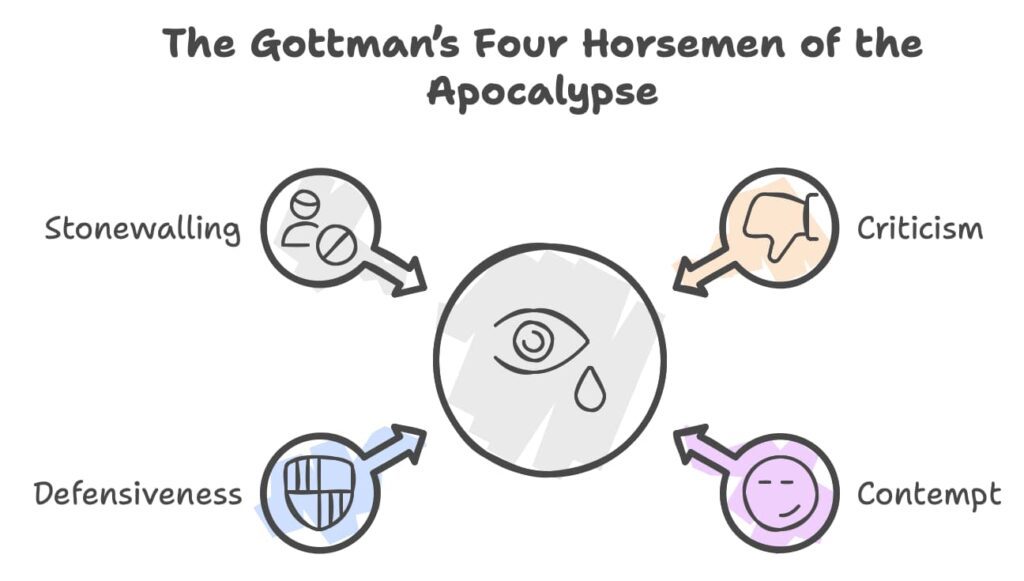
The Gottmans’ Four Horsemen of the Apocalypse
The Gottmans, John and Julie Gottman, are a husband-and-wife team who have conducted extensive research on relationship dynamics, particularly focusing on communication patterns. One of their most influential frameworks is the concept of the Four Horsemen of the Apocalypse, which describes communication behaviours that can be highly destructive to relationship health:
- Criticism – Attacking a partner’s character rather than addressing specific behaviours.
- Contempt – Speaking with disdain or superiority (e.g., sarcasm, mockery, eye-rolling).
- Defensiveness – Self-protection in the form of righteous indignation or victimhood.
- Stonewalling – Withdrawing from interaction and becoming emotionally unavailable.
The antidotes include gentle start-ups, building a culture of appreciation, taking responsibility, and self-soothing to stay present. While much of the Gottmans’ research has been conducted with married/committed couples, these principles generalise to many forms of relationships.
What the Four Horsemen Say About Why Relationships Fail
When the Four Horsemen are present, conflicts escalate and partners struggle to feel heard, respected, or emotionally safe. Over time, this can erode trust and intimacy, making repair increasingly difficult.
What the Four Horsemen Suggest About How Relationships Can Be Mended
Focusing on the antidotes—such as expressing needs using “I” statements, nurturing admiration and fondness, and learning to take breaks during conflicts—can help couples interrupt negative patterns and foster healthier communication.
Emotionally Focused Therapy (EFT)
Emotionally Focused Therapy (EFT), an evidence-based approach to relationship therapy that emphasises the importance of emotional bonds and attachment, was developed by Dr. Sue Johnson. EFT helps couples identify negative interaction patterns and build secure attachments. It encourages partners to communicate core emotional needs, such as a longing for comfort, support, or reassurance.
EFT consists of three stages:
-
De-escalation of the negative cycle
-
Restructuring interactions / building secure bonds
-
Consolidation and integration
In the first stage, couples learn to identify and understand the patterns of interaction that lead to disconnection.
The second stage involves creating new, more positive patterns of interaction—reaching for each other with clarity and responding empathically to each other's emotional needs.
In the final stage, couples consolidate their new ways of relating, reinforcing their improved communication and emotional connection.
What EFT Theory Says About Why Relationships Fail
According to Emotionally Focused Therapy (EFT) theory, relationships often falter when partners become caught in negative cycles of interaction—pursue/withdraw, attack/defend, or demand/stonewall—that obscure their deeper attachment needs. When partners misread or miss each other’s bids for connection, they may interpret vulnerability as rejection or criticism, making it more difficult to repair the relationship and causing it to ultimately fail.
What EFT Theory Says About How Relationships Can Be Mended
EFT theory suggests that relationships can be mended by working to create secure attachment: identifying the patterns of interaction that have led to disconnection, and building more positive, responsive patterns that meet each other's emotional needs.
Esther Perel’s exploration of desire and intimacy
Esther Perel is a psychotherapist and author whose work focuses on desire, intimacy, and erotic intelligence in long-term relationships. She explores the paradox of how security and familiarity—while essential for trust—can sometimes dampen erotic desire, which often thrives on novelty, imagination, and distance.
Perel proposes that sustaining desire within committed relationships involves cultivating a sense of self that remains distinct and alive—engaging with personal interests, friendships, and experiences that bring vitality back to the relationship. She encourages couples to embrace playfulness, curiosity, and the ability to see their partner as an “other” again, rather than an extension of themselves.
What Perel’s Exploration of Desire and Intimacy Says About Why Relationships Fail
Esther Perel’s exploration of desire and intimacy suggests that relationships fail when partners become overly fused or lose their sense of individuality, leading to a dynamic in which novelty and erotic energy diminish. A lack of boundaries, play, and personal growth can contribute to this decline.
What Perel’s Exploration of Desire and Intimacy Says About How Relationships Can Be Mended
Perel’s work suggests that relationships can be mended by revitalising erotic energy and rekindling curiosity—through space, self-care, playful rituals, and reimagining one’s partner. By balancing closeness with autonomy, couples can foster a deeper, more sustainable connection.
Psychodynamic perspectives: early patterns and unconscious processes
Psychodynamic theories, rooted in the work of thinkers like Freud, Klein, Winnicott, and Bowlby, explore how early experiences, attachment patterns, and unconscious processes shape how we relate to others in adulthood.
Sigmund Freud's repetition compulsion
As I delve into psychodynamic theories, I’d like to start with Sigmund Freud’s idea of repetition compulsion, which suggests that we may unconsciously repeat unresolved childhood conflicts in adult relationships. For example, someone who experienced emotional neglect might find themselves drawn to emotionally unavailable partners, not because it feels good, but because the pattern is familiar—even if painful.
Note: In contemporary practice, repetition compulsion is treated as a clinical concept for understanding patterns rather than a directly testable mechanism; evidence and interpretations vary.
Why relationships fail (psychodynamic lens)
From a psychodynamic standpoint, relationships often falter when unresolved internal conflicts are projected onto partners, when defences (like denial or splitting) get in the way of intimacy, or when attachment injuries remain unaddressed.
How relationships can mend (psychodynamic lens)
Therapeutic work can help partners recognise these patterns, develop insight into the roots of conflict, and build new relational experiences that foster security and trust.
Humanistic approaches: empathy, authenticity, and growth
Humanistic psychology emphasises the capacity for self-awareness, choice, and growth. Two key voices are Carl Rogers and Abraham Maslow.
Carl Rogers' Person-centred Therapy
Person-centred therapy focuses on the therapeutic relationship and three core conditions: empathy, unconditional positive regard, and congruence (authenticity). Rogers believed that, when these are present, people naturally move toward healing and growth.
Abraham Maslow and needs
Maslow’s hierarchy highlights physiological, safety, love/belonging, esteem, and self-actualisation. In relationships, neglecting basic needs—emotional safety, belonging, and esteem—can undermine intimacy. Supporting each other’s growth and self-actualisation can deepen connection.
Self-actualisation in a relationship context isn’t a solitary journey; it often flourishes when partners encourage each other’s aspirations while nurturing the bond.
GSRD (Gender, Sexual, and Relationship Diversity) theories
Intersectionality and relationships
Intersectionality, a term coined by Kimberlé Crenshaw, refers to the ways multiple aspects of identity (such as race, gender, class, sexuality, disability) intersect to shape experiences of power, privilege, and oppression. Relationships are influenced by the complex interplay of these multiple factors. For example, a queer interracial couple may face both racialised stressors and heteronormative assumptions, which interact with economic and family pressures.
By considering intersectionality, we can better appreciate the unique challenges and strengths that different couples bring into their relationships and work toward more inclusive, responsive support.
Queer theory and relational scripts
Queer theory invites us to consider how the performance of gender, societal scripts, and norms shape what we consider a “valid” relationship. It encourages flexibility, consent, and reimagining commitment beyond narrow norms.
Polyamory and consensual non-monogamy
Recently, alternative relationship structures such as polyamory and consensual non-monogamy have gained visibility. These frameworks centre informed consent, communication, and ethical agreements between adults. They aren’t “fixes” for struggling relationships; rather, they are valid structures that some people find align better with their values and needs.
Key skills across non-monogamous relationships include: explicit boundaries, time management, ongoing consent, and a shared vocabulary for difficult emotions (e.g., jealousy, compersion).
Practical tools for mending relationships
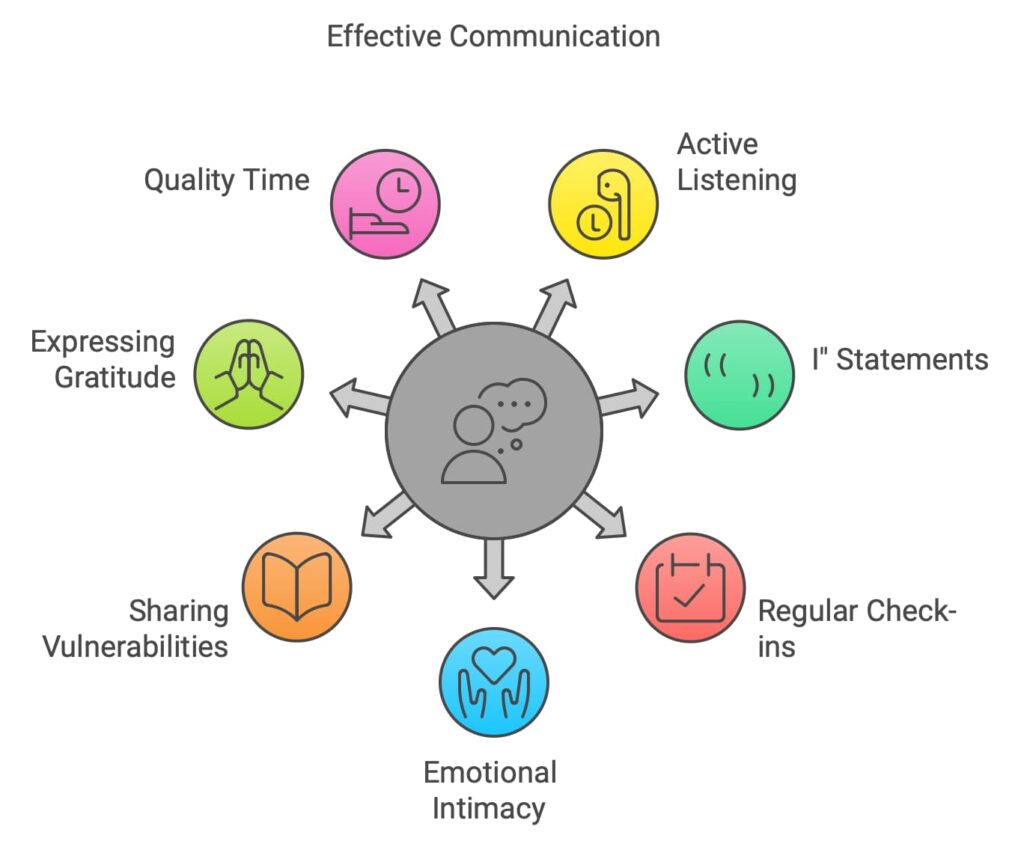
- Active listening & empathy: Reflect back what you heard; validate emotions before problem-solving.
- Gentle start-ups: Begin tough conversations with softness and specificity.
- Repair attempts: Learn and accept bids for repair during conflict (humour, a touch, a pause).
- Rituals of connection: Shared routines (a weekly walk, a check-in) that reinforce the bond.
- Boundaries & autonomy: Support each other’s space and individuality alongside closeness.
- Shared meaning: Revisit values, goals, and what your relationship stands for.
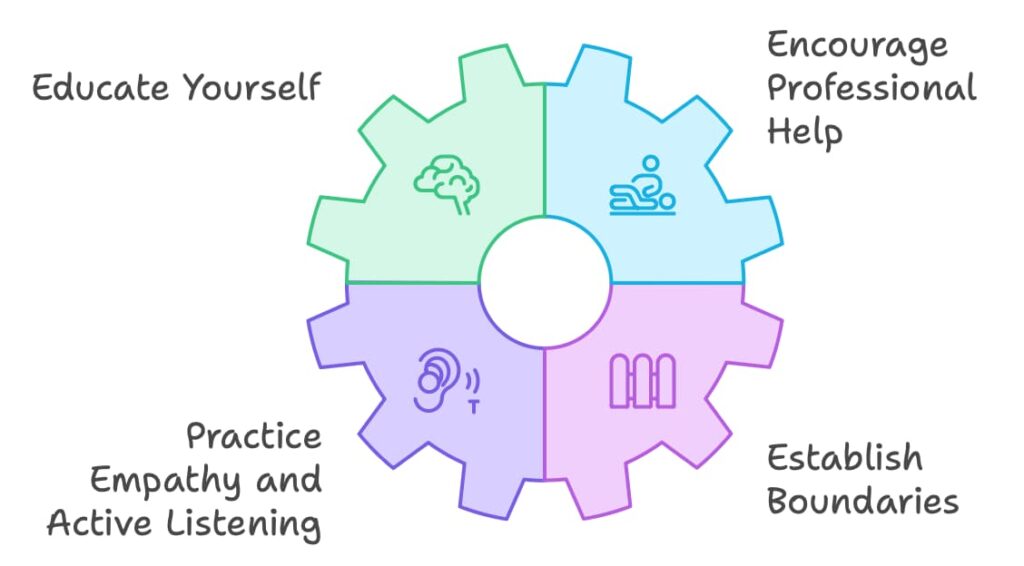
If you’re stuck, it may be worth exploring professional help by speaking to a counsellor. A skilled therapist can help you interrupt entrenched cycles and practise new skills.
The impact of technology on relationships
Technology has also played a significant role in shaping modern relationships, from the ways we meet and communicate to how we negotiate privacy and boundaries. While technology can enhance connection, it can also create misunderstandings, trigger comparison, or add pressure to present an idealised version of our lives online.
Establishing clear digital boundaries (e.g., expectations around devices, social media, and privacy) can reduce friction and protect trust.
Further reading & resources
- “Mating in Captivity” by Esther Perel – Explores the tension between security and freedom in long-term relationships.
- “The State of Affairs: Rethinking Infidelity” by Esther Perel – A nuanced look at betrayal, meaning, and healing.
- “Attached” by Amir Levine & Rachel Heller – A popular introduction to adult attachment styles (useful but simplified).
- “Come as You Are” by Emily Nagoski – A compassionate, research-informed guide to sexuality and arousal.
- “More Than Two: A Practical Guide to Ethical Polyamory” by Franklin Veaux & Eve Rickert – Practical tools and ethics for consensual non-monogamy.
- “The Five Love Languages” by Gary Chapman — Note: Despite its popularity, empirical support is mixed and limited; use it as a conversation tool rather than a diagnostic framework.
Podcasts
- “Where Should We Begin?” with Esther Perel – Real couples, real sessions, with reflective commentary.
- “Small Things Often” by The Gottman Institute – Bite-sized skills and advice from Drs. John and Julie Gottman, helping couples strengthen their relationships.
- “Dear Sugars” with Cheryl Strayed and Steve Almond – Thoughtful advice and storytelling about love, loss, and repair.
- “Multiamory” – Insights and advice on navigating the world of non-monogamy and polyamorous relationships.
Final thoughts
Healthy relationships are not the absence of conflict but the presence of skills, empathy, and a shared commitment to growth. Whether you’re rebuilding trust after rupture, re-igniting desire, or learning to communicate more effectively, small, consistent changes can make a profound difference.
If safety is a concern (violence, coercion, untreated substance misuse, suicidality), seek professional help immediately and prioritise well-being above all else.
This article is for information and reflection. It’s not a substitute for personalised therapeutic advice.